Jan 20, 2022 | Canada, Historical Moment, Ontario
An 1883 crime led to a dubious conviction and botched execution. Twenty years later, would another suspected killer hang?
The Picton Gazette of May 9, 1884, called it “this Tragedy — one of the worst that has ever stained the criminal record of this law abiding county.”
The fateful events unfolded on Saturday, December 21, 1883. Gilbert Jones, who farmed near the village of Bloomfield, went to Bloomfield Station that afternoon to sell part of his hop harvest, for which he received the quite considerable sum of $555. Toward evening, he and his wife, Margaret, welcomed a visitor: Peter Lazier, a relative from Belleville, who would be staying overnight. Around 10 p.m., Margaret Jones answered a knock at the kitchen door. Two armed and masked men burst in. Her frightened screams catapulted Lazier out of the guest bedroom. In the ensuing tussle, one of the intruders struck Lazier on the head. The bandits fled when Jones emerged from his bedroom clutching a gun; on the way out, one of them “deliberately” fired at Lazier, “the shot,” according to the Gazette, “taking effect almost instantly, when he gradually sank to the floor and expired.”
A group of concerned neighbours, including the county constable, rushed to the Joneses’ farm. It had snowed earlier, but the sky was now clear. By lantern light, the posse was able to follow two sets of footprints heading away from the house. The trail seemed to lead toward the homes of Joseph Thomset and the Lowder family near West Lake, a distance of about five miles from the crime scene.
What followed was a classic case of how not to conduct an investigation.
Read the full article on the TVO website.
Dec 30, 2021 | Don Jail, Historical Moment, Ontario
Part 6: Next Christmas
 On Tuesday, December 21, 1982, after a series of 10 abortive court appearances due to ongoing congestion within the court system, Leslie Sheppard finally had his moment of truth before York County Court Judge Ted Wren. Sheppard faced a two-to-three-year prison sentence for being an accessory after the fact to the escape of the four convicts from the Don Jail on December 25, 1981.
Rewind to December 1981: Things were looking bright for Sheppard. He was working full time as a printer for York Litho and had just purchased a $100,000 house in Pickering, where he was living with his 10-year-old son. Determined to pay off his mortgage as quickly as possible, he took a second job moonlighting for Diamond Taxis in Toronto. His first day on the job would be December 25. He reckoned that spending Christmas away from his family would be a hardship but well worth his while.
He was wrong.
After he had dropped off just his second fare of the night at Riverdale Hospital, four men, uttering dark threats, scrambled into his cab on the narrow roadway between the hospital and the Don Jail. It took Sheppard mere moments to realize that his vehicle had been commandeered by a quartet of jail breakers.
He was ordered to drive along Gerrard Street East and pull over near Parliament Street. He pleaded with the bandits not to steal his cab and gave back the $10 fare one of them had thrust at him. Three of them got out, warning him to keep his mouth shut. The fourth, Andre Hirsh, rode for a few blocks further and told Sheppard to mislead the police if questioned as to where he had been dropped off.
Sheppard was stopped by police a few minutes later, and he identified himself as the man who had just picked up the escapees outside the jail. It was during the interview that followed that Sheppard, still trembling from his terrifying encounter, committed the grave error that would plunge him into a year of misery and chaos: he lied. He concocted the story that he had dropped all four men off at Gerrard and Sherbourne streets, believing that they were being pursued by bikers. And that they had paid for their ride — $1.70 plus a 30-cent tip.
Sheppard dreaded getting involved, and dreaded even more what might happen if the convicts decided to wreak revenge on him for helping the cops. Over a period of four miserable days, he came to the realization that he had been more than foolish, and he went into a police station to ’fess up. The police were skeptical of his belated efforts to change his story. From their point of view, he was not an innocent victim but someone who had aided inmates to escape.
Sheppard’s annus horribilis had begun.
Over the next 12 months, he was overwhelmed both financially and emotionally. He had to sell his house to cover the thousands of dollars he spent on legal fees. He was depressed, fearful of going out, and terrified that, in spite of being innocent, he would be sent to jail.
His lawyer, Eddie Greenspan, called him “the ultimate victim of circumstances — this poor sap who walked into an utter horror story.”
On Tuesday, December 21, 1982, the judge agreed with Greenspan. His client was acquitted of all charges.
And a delighted Sheppard told the Toronto Star’s Ellie Tesher, “Now I believe in Christmas again.”
Read the full story:
Part 1
Part 2
Part 3
Part 4
Part 5
Dec 29, 2021 | Canada, Don Jail, Historical Moment, Ontario
Part 5: Last Man (Out)standing
On September 24, 1982, Staff-Sergeant Julian Fantino and Sergeant Robert Montrose of Metro Toronto Police flew to Los Angeles. This was no pleasure trip — their purpose was to pick up two fugitive murder suspects and escort them back to Toronto.
The first of these was Robert Palmer, who had allegedly bludgeoned his father to death with a hammer.
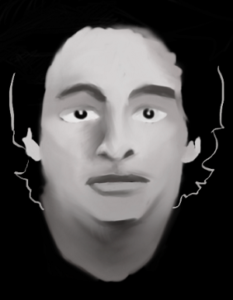 The second was Andre Hirsh, being extradited on the orders of a U.S. federal judge. Hirsh had been charged in Toronto with first-degree murder in the slaying of North York jeweller Frank Abrams in May 1981. He had fled to the U.S. after escaping from the Don Jail in December 1981.
Fantino testified at Hirsh’s trial, which was held in October 1982. When taken into custody after the botched robbery, Hirsh had described himself as “the black sheep” of his family. He was heavily indebted to loan sharks, and “had to have the bread [cash] … or else.” He maintained that the killing was the victim’s own fault: Abrams had foolishly played “Joe Hero” by threatening to call his dogs and attempting to snatch Hirsh’s gun away from him. During a struggle with Abrams outside the store, Hirsh shot the jeweller three times, one bullet piercing his heart.
Crown Counsel Chris Rutherford was appalled. As reported in the Globe and Mail, he declared that Hirsh “should be locked up and locked up for a long time…. He killed an innocent, peaceable shopkeeper who had the absolute audacity to stand up for his property.”
Hirsh was found guilty of second-degree murder. Before his sentence was handed down on November 30, 1982, his defence lawyer read to the court a one-page handwritten letter of apology, addressed to Frank Abrams’s widow. Part of it stated: “I am not a cold-blooded vicious person without conscience…. I feel the disgust you must have for me; it shames me strongly. Please understand that there is no limit to the remorse I feel and will carry with me forever…. I’m sorry, I’m truly sorry.”
Hirsh’s letter did not succeed in altering the opinion of Mr. Justice John O’Driscoll, who remained unimpressed. “There may be some degree of remorse in you,” he told Hirsh. But “you are also more than somewhat of a con man.” He sentenced Hirsh to life imprisonment with no parole for at least 16 years.
Part 1
Part 2
Part 3
Part 4
Part 6
Dec 28, 2021 | Don Jail, Historical Moment, Ontario
Part 4: The Third Man
By December 28, 1981, Don Jail escapees Terry Musgrave and Randy Garrison were both safely behind bars. On January 3, 1982, by pure accident, the next fugitive was ushered back into the fold.
That Sunday, the Ontario Provincial Police (OPP) detachment at Lindsay received a tip from a sharp-eyed cottager in Kenrei Park, a small community some 5 kilometres north of Lindsay, that someone appeared to be occupying a cottage that should, rightly, have been unoccupied. Three officers paid a visit to the community to check things out; there was indeed a trespasser. After surrounding the cottage, they took the intruder into custody. The man was alone and unarmed, and he offered no resistance.
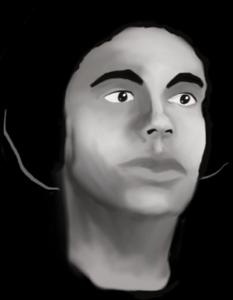 It was only after the arrest that the OPP established his identity — Brian William Bush, who had been charged with robbery and possessing restricted weapons. Metro Toronto Police had earlier described Bush as “very dangerous”; their Lindsay counterparts must have thanked their lucky stars that he had none of those lethal weapons on his person at the time.
On February 9, Bush was convicted for his part in the bungled Leaside bank robbery in March 1981 that left one of his fellow bandits dead and two others wounded in a shootout with police. This was his third robbery conviction. As reported in the Toronto Star, a stern Judge Hugh Locke told the court that Bush regarded “jail as an occupational hazard. He knew there were weapons being used. He is a very dangerous man with dire prospects for rehabilitation.” He sentenced Bush to 11 years in prison.
Part 1
Part 2
Part 3
Part 5
Part 6
Dec 27, 2021 | Don Jail, Historical Moment, Ontario
Part 3: Two Down, Two to Go
Unquestionably the baddest of the jail-breaking bunch was the first to be picked up by Metro police. Convicted murderer Terry Musgrave, that “cold-blooded killer,” was spotted by two uniformed policemen outside a shopping plaza on Jane Street in North York. He was arrested at gunpoint.
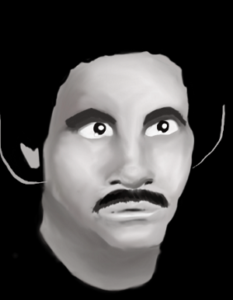 Handcuffed and in shackles, Musgrave appeared in court at College Park in Toronto on December 29. His charges, as might be presumed, were serious: escaping custody and possession of a prohibited weapon – a sawed-off .22-calibre rifle. He was eager to get things over with. (“I don’t want a lawyer. I plead guilty.”) At the judge’s insistence, he agreed to have his case remanded for a week — both to consult a lawyer and to get treatment for a foot fracture. He had broken a bone when jumping over the Don wall.
The second fugitive to be corralled was Randy Garrison, who surrendered on December 28, after just three days on the lam. Garrison had telephoned his father, Ernest, asking him to arrange for two officers to meet him at a streetlight on the corner of Driftwood and Finch avenues in North York.
Sergeant Don Bell and Constable Steve McAteer duly “went and stood there.” And, in true noir fashion, “Garrison just appeared out of the darkness.”
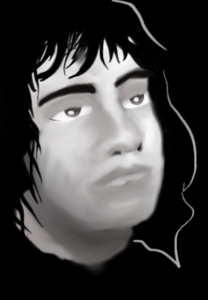 Garrison was exhausted. Since his escape, he had managed to snatch just a couple of hours’ sleep each night. He was also scared, after reading newspaper reports that he was regarded as a suspect in a robbery at a York borough gas station the day before. Three bandits in ski-masks had bound and gagged the attendant and threatened him with a knife. Garrison later swore to both the police and his father that he had played no part in that robbery. His overriding fear was that the longer he stayed on the run the more he would be blamed for any crimes committed in the future. The police believed his story.
The police also believed that he had nothing to do with planning the jail break.
Garrison was “the odd man out,” said Sergeant Bell. “We felt he would be the one who would give himself up.”
At Garrison’s trial on January 26, 1982, Bell told the court that the hapless inmate first learned of the “elaborate escape plan” on Christmas Day, when he was transferred to a segregated (and poorly supervised) area on the second-floor of the Don Jail where Musgrave, Hirsh, and Bush were already sequestered. When his three fellow escapees piled into the taxi after the escape, Garrison tried to run away. But the taxi drew up beside him and someone called out: “Randy, get in.” As evidence of Garrison’s reluctance, Bell testified that police had found a note on his person written on the back on a cigarette box. It read: “I Terry Musgrave forced Randy Garrison to go with us.” Musgrave later confirmed that he had indeed written it.
Garrison, who pleaded guilty to being “at large,” was sentenced to three months in jail, to be added to the three years he was already serving for the gas station robbery in 1979.
Terry Musgrave and Randy Garrison, both back inside.
And then there were two…
Part 1
Part 2
Part 4
Part 5
Part 6
Dec 26, 2021 | Don Jail, Historical Moment, Ontario
Part 2: The Rogues’ Gallery (Dec 26)
Ranked from bad to worst, the four criminals who scaled the wall of Toronto’s Don Jail and hopped into a conveniently idling cab on the night of December 25, 1981, were Randolph “Randy” Garrison, Brian William Bush, Andre Hirsh, and Terrance “Terry” Derek Musgrave. All of them were in their 20s. All had based their criminous activities in Toronto or neighbouring cities like North York (not part of the city of Toronto at the time), and their combined rap sheets contained more than 80 offences.
Randy Garrison of Toronto, aged 23, had received a three-year prison sentence for robbing a Kingston Road service station in 1979 and was facing a further trial at the time on charges of robbery and assault causing bodily harm.
Brian Bush was a 27-year-old Scarborough man awaiting trial on charges of armed robbery and possession of a restricted weapon. Bush’s claim to fame — or infamy — was his membership of the Dirty Tricks Gang, so called because of the creative diversionary tactics they adopted while carrying out their heists. Their preferred modus operandi when making a getaway by car was to scatter planks or lengths of hose studded with nails on the roadway to puncture the tires of pursuing vehicles. Bush was arrested after an abortive robbery at a Royal Bank branch in Leaside. Metro Toronto Police had received a “vague tip” that something might be going down, and they were waiting outside the bank as the masked bandits fled with their haul of around $24,000. In the firefight that ensued, police shot one of the robbers dead and wounded two others. Bush was arrested in Yorkville after a high-speed car chase through the city.
Andre Hirsh of Toronto, aged 24, was awaiting trial on a charge of first-degree murder after a bungled holdup at a Weston Road jewelry store in May 1981. When confronted at gunpoint during the robbery, the store owner, 38-year-old Frank Abrams, had flatly refused to hand over any money or jewelry. He was shot outside his store while trying to wrest the firearm from his attacker. A group of bystanders chased Hirsh as he fled and brought him down. Hirsh told police that Abrams “had it coming to him,” adding, “the guy had to play Joe Hero.” Abrams had threatened to fetch his dogs, “so I unloaded on him…not in the head or heart but in the stomach.” The truth was starkly different: Abrams was shot three times, including once through the heart.
And at the top (or bottom) spot, at very worst, was self-confessed killer Terry Musgrave, a 25-year-old from North York. The brutal murder had horrified the city back in January 1981. The victim was Catherine Maruya, the 43-year-old owner of a ceramic studio in North York, who was found bound and gagged at her workplace. She had been stabbed 28 times with a pair of scissors and strangled. Musgrave, described by the prosecutor at his trial as “a cold-blooded killer,” had pleaded guilty to second-degree murder. He had received an automatic life sentence and was being held at the Don pending the judge’s decision as to the minimum time he would serve.
Part 1
Part 3
Part 4
Part 5
Part 6