Aug 14, 2017 | Canada, Death Penalty, Execution, People
PLAYERS IN THE DEADLY GAME OF HANGMAN IN CANADA
THE HANGMAN
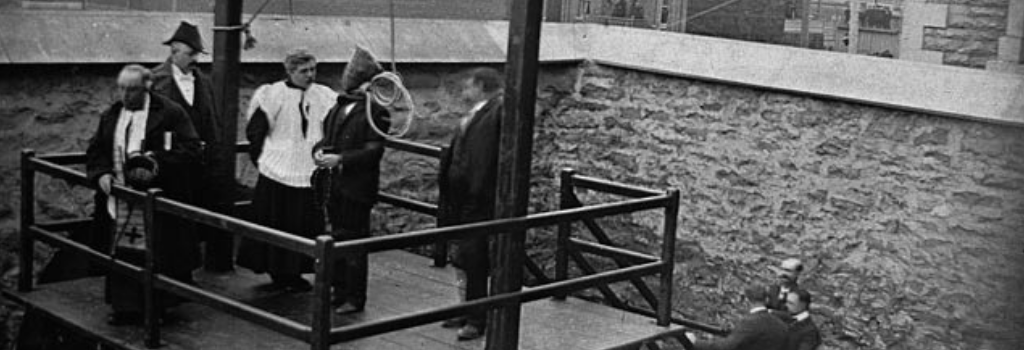
“The main players are all assembled….And standing by on the sidelines, waiting for his turn, is the most contentious participant of them all: the hangman.
The game is on.”
Excerpted from Drop Dead by Lorna Poplak Copyright © Lorna Poplak, 2017
All rights reserved
www.dundurn.com

Aug 14, 2017 | Alberta, Canada, Death Penalty, Execution, Media, Presentation
Death by hanging.
That was the fate of more than 700 people in Canada between Confederation in 1867 and the abolition of capital punishment in 1976. How did this affect individuals caught up in the criminal justice system during this dark chapter of our history?
The family of Elizabeth Popovitch was devastated when she was hanged in 1946 for the robbery and brutal slaying of her benefactor.
Cook Teets was hanged for poisoning his wife, but he could not have administered the poison.
A youth was hanged a second time after recovering from his first hanging.
These and other sad, horrific, bizarre, but sometimes uplifting stories of people involved in the criminal justice system formed the basis of my recent conversation with Russell Bowers on the CBC’s Daybreak Alberta.
Jul 27, 2017 | Canada, Death Penalty, Execution, People
PLAYERS IN THE DEADLY GAME OF HANGMAN IN CANADA
THE FEDERAL CABINET
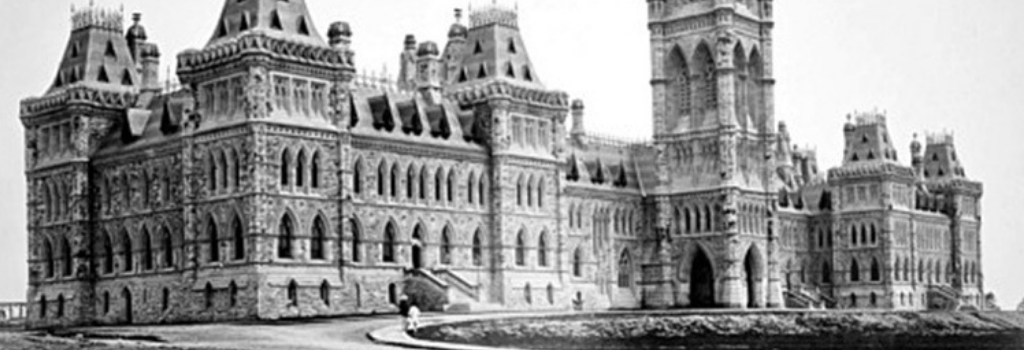
“When someone was convicted of a capital crime, the presiding judge was required to submit a detailed report to the minister of justice in Ottawa.
The federal Cabinet and officials of the Department of Justice would review the case. At the end of this sometimes lengthy process, cabinet would make the ultimate decision on what sentence to impose. If they resolved that the law “be allowed to take its course,” an Order-in-Council was issued instructing the local Authorities to proceed with the execution”
Excerpted from Drop Dead by Lorna Poplak Copyright © Lorna Poplak, 2017
All rights reserved
www.dundurn.com
Jun 21, 2017 | Canada, Death Penalty, Execution, Ontario, People, Uncategorized
PLAYERS IN THE DEADLY GAME OF HANGMAN IN CANADA
THE SHERIFF
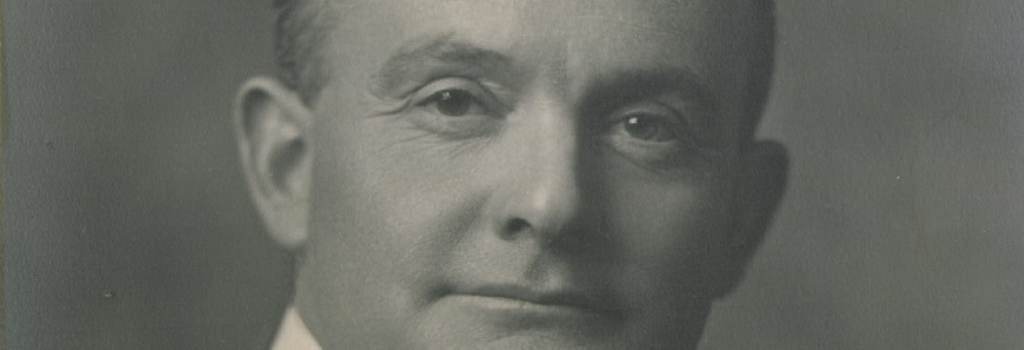
“With the accused in custody, the official tasked with organizing the trial was the local sheriff. But if you think of a sheriff as a dude in the Wild West walking down a dusty road with a shiny star on his chest, spurs clanking on his heels, and a pair of six-shooters on his hips, think again.”
Excerpted from Drop Dead by Lorna Poplak Copyright © Lorna Poplak, 2017
All rights reserved
www.dundurn.com
May 19, 2017 | Canada, Death Penalty, Execution
On Wednesday evening, May 17, at an event co-sponsored by the Toronto Public Library and the North York Historical Society, I invited the gathering to “Meet the Hangman.” To be more specific, I introduced them to John Radclive, Arthur Ellis and John Ellis, the three most famous executioners in Canada from Confederation in 1867 to the abolition of capital punishment in 1976.
What was the effect on these individuals of their grim job?
Radclive plied his trade from the early 1890s to his retirement in 1911. He was initially quite successful financially. But he enjoyed hissinister reputation as a hangman and alienated many with his offensive behaviour and his excessive drinking. In 1911, he died of cirrhosis of the liver, penniless and alone, and tormented by his inner demons.
Arthur Ellis, without doubt the most famous and prolific hangman in Canada, succeeded Radclive in 1911. For the next twenty-five years he crisscrossed the country, claiming to have carried out more than 600 hangings world-wide before a bungled execution put paid to his career in 1935. He liked to emphasize his human side, but his self-destructiveness and violence lurked just beneath the surface. He, too, died in poverty, probably of an alcohol-related disease, in 1938.
John Ellis hanged at least fifteen men. He carried out the last two hangings at the Don Jail in Toronto in 1962, fourteen years before the official abolition of the death penalty. According to one account, the retiree, then in his fifties, enjoyed spending the winter months in Florida like thousands of other Canadian snowbirds; another report in 1984 stated that he was living in the Bahamas.
And what were their final thoughts about capital punishment?
John Radclive became increasingly opposed to capital punishment in his last years. Arthur Ellis remained an advocate, but, as for hanging, it “belongs to a past age,” he wrote in 1935. “I am strongly in favour of the electric chair.” John Ellis never deviated from his opinion that hanging was the best form of execution. People “don’t realize just how humane it is. Unlike electrocution,” was his view in 1976.
May 8, 2017 | Canada, Death Penalty, Execution
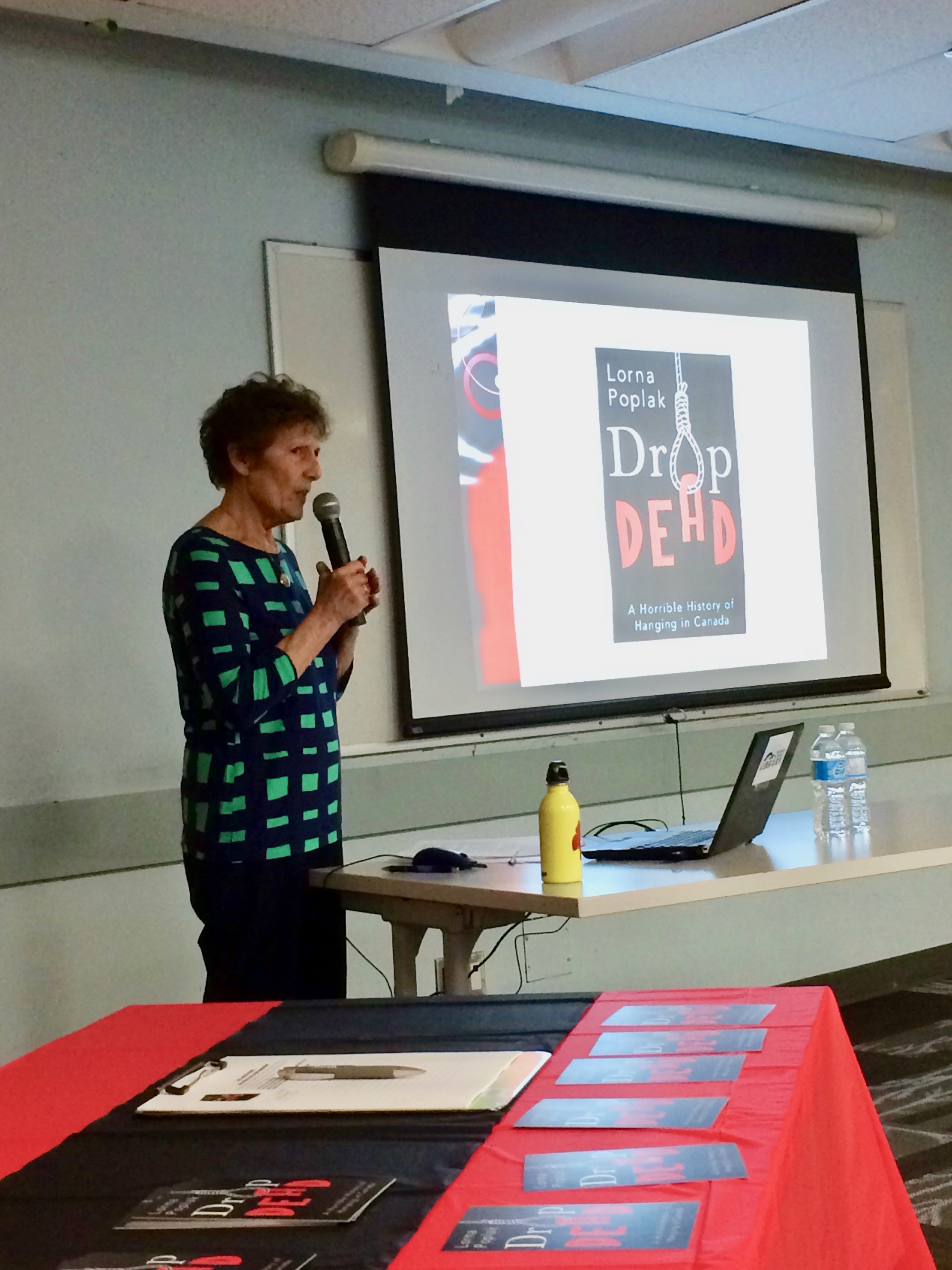
Join me at the Fairview Branch of the Toronto Public Library on Wednesday, May 17th (7:30-9pm) for a FREE talk!
Drop Dead is the story of alcoholic executioners, nervous sheriffs, hanging judges, wrongful convictions, unruly mobs, and perhaps even a botched execution (or two)… I invite you to “Meet the Hangman” or, to be more precise, to meet the three most famous hangmen in Canada in the 109-year period from Confederation in 1867 to the abolition of capital punishment in 1976.
Thanks to the North York Historical Society and the North York Central Library, Society and Recreation Department for hosting this event!
Details can be found here:
http://www.torontopubliclibrary.ca/detail.jsp?Entt=RDMEVT282657&R=EVT282657
Directions to the library can be found here:
http://www.torontopubliclibrary.ca/detail.jsp?Entt=RDMLIB010&R=LIB010