PART 2: PARSING OUT THE PUZZLE

Thomas D’Arcy McGee, the Victim

McGee.png

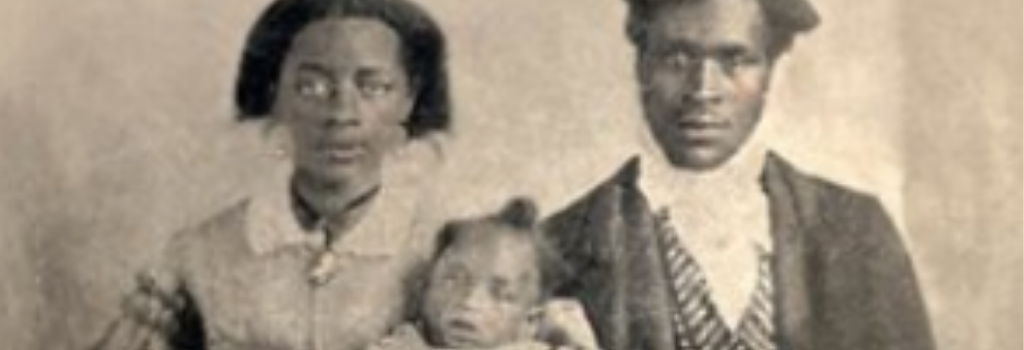
At the time of Confederation, Thomas D’Arcy McGee was a Very Important Person in Canada. He was a poet, a journalist, an inspired and charismatic public speaker, a Father of Confederation, and a member of parliament. After starting out violently opposed to British rule in his native Ireland, McGee immigrated to Canada and became politically involved in the peaceable move toward union. However, he antagonized the Fenian Brotherhood, an Irish secret society and separatist movement that wanted to strike at Britain by invading Canada. McGee was denounced as a traitor to Ireland. He also started receiving death threats. Perhaps he shouldn’t have just laughed them off…


The Scene of the Crime, Toronto House, Ottawa

Toronto house.png

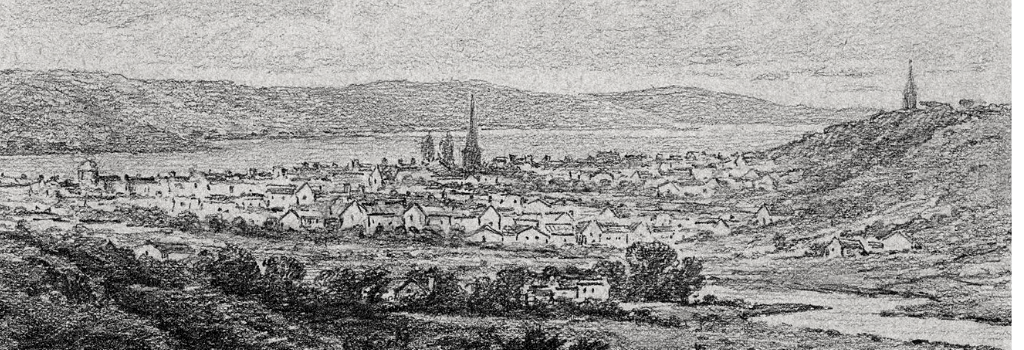
In the early hours of April 7, 1868, after a rousing speech in the House of Commons, McGee walked back to his lodgings in Ottawa. He had been renting a room in Toronto House at 71 Sparks Street, a.k.a. “Mrs. Trotter’s boarding house.” On arrival, he was cut down by an assassin’s bullet. His landlady, who was still awake inside, became aware of scuffling sounds. When she opened the front door to investigate, she heard a sharp crack. She found McGee slumped dead on the threshold, shot from behind at such close range that some of his teeth were found embedded in the doorpost. In this photograph of Toronto House, taken in 1868, an unidentified woman stands with a basket in her hand. Who was she? Possibly Mary Ann Trotter, whose establishment hit the headlines as the scene of the assassination of a high-profile Canadian federal politician.


The Reward
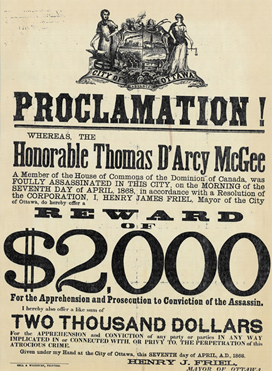
Flags flew at half mast as the shocked nation went into mourning. Henry James Friel, mayor of the city of Ottawa, posted a reward of $2,000 “for the apprehension and prosecution to conviction of the assassin,” and the federal government and provinces of Ontario and Quebec together offered an additional $10,000 in reward money. This was an enormous sum of money. It’s impossible to calculate exactly, as Canada only started tracking inflation in 1914, but $12,000 in 1868 would be equivalent in purchasing power to well over $250,000 today.


Patrick James Whelan, the Assassin

Patrick Whelan.png

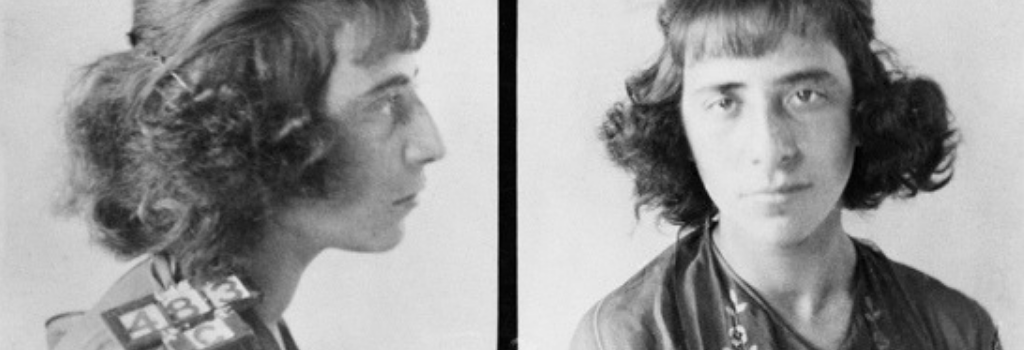
Immediately following McGee’s death, a massive manhunt was launched and hundreds were arrested. Caught up in the police net was Patrick James Whelan, an Irish immigrant with strong Fenian connections. He’d been present during McGee’s speech in the House of Commons, and a gun was found in his pocket. With motive, opportunity and possession of a weapon all counting against him, he was found guilty of murder and sentenced to death by hanging. Whelan swore that he was innocent. “I am here standing on the brink of my grave,” he told the court, “and I wish to declare to you and to my God that I never committed this deed, and that, I know in my heart and soul.” Whelan’s lawyers launched two appeals against his sentence. Both failed, and in February 1869, Whelan met his end in a blinding snowstorm at the Carleton County Gaol in Ottawa.


The Murder Weapon

When he was arrested, Whelan was carrying a fully loaded .32 caliber Smith & Wesson tip up revolver, which had recently been fired. Although some say that there was only a weak circumstantial link between the gun and the crime, it became a crucial piece of evidence at Whelan’s trial and contributed to his death sentence. The firearm eventually found its way into the possession of Scott Renwick, an auto mechanic from Dundalk, Ontario. New and improved ballistic tests in 1973 at the Ontario Centre of Forensic Sciences showed that a bullet fired from the gun was very similar to the fatal McGee bullet. Although this did not prove conclusively that Whelan shot McGee, it did indicate that his gun might have been the lethal weapon. The Canadian Museum of Civilization (now the Canadian Museum of History) certainly regarded the revolver as “an icon of Canadian history.” In 2005, they bought it at auction for the sum of $105,000.


McGee’s Funeral

On Easter Monday, 1868, McGee was given a state funeral — Canada’s first — on what would have been his 43rd birthday. More than 80,000 people, many of them perched on rooftops or dangling from windows, watched in silence as the funeral procession wound its way through the streets of Montreal. The funeral carriage was sixteen foot high and sixteen foot long. It was drawn by six grey horses with black ostrich plumes tossing on their heads. Solemn military bands all along the route played Handel’s “Dead March.” McGee’s body was laid to rest in his family mausoleum at the Notre-Dame-des-Neiges Cemetery in Montreal.

Thomas D’Arcy McGee remains the only Canadian federal politician ever to have been assassinated.

ARTHUR ELLIS SHORTLIST EVENT

ARTHUR ELLIS SHORTLIST EVENT

What a thrill to be invited to speak at the Crime Writers Canada’s Arthur Ellis shortlist event at Indigo Yonge & Eglinton on Wednesday evening, April 18!

Hope you can join me.

BLACK HISTORY AND CAPITAL PUNISHMENT: TWO CASE STUDIES (PART 1)

BLACK HISTORY AND CAPITAL PUNISHMENT: TWO CASE STUDIES (PART 1)

Over the past few weeks, I’ve been rereading The African Canadian Legal Odyssey: Historical Essays, edited by Barrington Walker.

Two of the essays resonate strongly with me; they link both to Black History Month and to my ongoing interest in the history of capital punishment in Canada.

Both essays illustrate the conflicted attitude toward Black people within the Canadian criminal justice system during the 20th century.

In “Creating the Myth of ‘Raceless’ Justice in the Murder Trial of R. v. Richardson, Sandwich, 1903,” Susan McKelvey, now a doctor of law and practicing lawyer, analyzes the case of Oliver Richardson, accused of murdering his neighbour and fellow-farmer Edmund Matthews in Essex County, Ontario.

Historically, notes McKelvey, we Canadians have prided ourselves for embracing the idea of “British justice,” which distinguishes our country from the more overtly racist Americans. Slavery officially ended in Canada in 1833, and Canadians abhorred vigilante justice as practiced by our southern neighbours. However, “stereotypes deeply entrenched within society depicted Black people as innately inferior to whites.” Discrimination and inequality spilled over into the criminal justice system, too.

The murder of Edmund Matthews was the culmination of a long-standing family feud, but McKelvey points out that the real significance here is that for the first time in Ontario a white man stood trial for killing a Black man.

Black people had started settling in Essex County in the early 1800s and by 1903 there was a sizeable population in the area. Generally, relations between whites and Blacks were positive, and the Matthews family was particularly well regarded by the white community. Not by Oliver Richardson, though, who claimed that Edmund Matthews had cheated him out of a strip of land, part of a parcel he had bought from a third party. Richardson, regarded as a ne’er-do-well, was constantly fighting with people in the area; Matthews’s only arguments were with his quarrelsome and litigious neighbour.

Things came to a head on July 10, 1903, when a mare and a colt escaped from the Matthews’ enclosure and the colt strayed onto Richardson’s property. Matthews did not retrieve the animal quickly enough; Richardson stormed onto his farm, and, in full view of both their families, pulled out his revolver and shot Matthews four times. Mattthews died the following day. Richardson faced a murder charge for “shooting and wounding with intent to kill.” And a murder conviction, it must be remembered, carried with it the sentence of death by hanging.

Richardson’s trial took place in September 1903. In his opening address, the presiding judge, as reported in the Amherstburg Echo, was “proud to say we are on Canadian soil where the life of the colored [sic] man is as much revered … as that of any other of our subjects.” The Crown attorney concurred. “Our colored citizens must get justice, and I am pleased to say that there are no burnings at the stake in our Dominion as in countries not far away.” As McKelvey dryly comments, “in a supposedly raceless system, there was nevertheless much emphasis placed on the race of the victim.”

Did this underlying racism play out in the eventual decision in the case? When it came to the witnesses, it became a case of “he said, she said,” or, more correctly, “they said, they said.” The Matthews family claimed that Richardson was the aggressor; the Richardson family, in spite of contradicting themselves and being “badly rattled” under cross-examination, insisted that Richardson had only opened fire after Matthews started throwing stones at him. Richardson’s lawyer insinuated that his client was forced to defend himself with a weapon because Matthews, as a Black man, was possessed of much greater strength. This in spite of the fact that Richardson, “a big burly fellow,” was some fifteen years younger than his killer. The Crown attorney reminded the court that Richardson was trespassing when he shot Matthews. And why was he carrying around a deadly weapon, unless he meant to use it?

After deliberating for an hour, the jury came back with a verdict of manslaughter, and the judge immediately sentenced Richardson to fifteen years in the Kingston Penitentiary. Whites in the community were satisfied with the result; Blacks expressed their disappointment in no uncertain terms. If Matthews had been white, they said, the verdict would have been murder.

McKelvey’s conclusion: “In one sense it seems fairly evident that a genuine effort was made to achieve justice for Edmund Matthews. But while those who were prosecuting Oliver Richardson believed that they were demonstrating the ‘racelessness’ of the Canadian justice system, a more careful contextual analysis reveals that the trial merely hid the more deeply entrenched racism and prejudices within society.”

Next week, in Part 2 of this mini-series, I’ll take a look at David Steeves’s analysis of the case of Daniel Perry Sampson, a Black man executed in 1935 for the murder of two young white brothers in Halifax, Nova Scotia. In a postscript to this case, Sampson received an unexpected mark of respect in December 2017.

THE BOLD AND THE BRAVE: INVESTIGATIVE JOURNALISTS IN THE TWENTIETH CENTURY

THE BOLD AND THE BRAVE: INVESTIGATIVE JOURNALISTS IN THE TWENTIETH CENTURY

In his book Behind the Headlines: A History of Investigative Journalism in Canada, Cecil Rosner characterizes investigative journalists as fierce and dedicated reformers whose mission is to expose wrongdoing.

“They are often obsessed with information, data, documents, and proof.” They will delve into a story for months or even years, risking personal and professional danger to discover the truth and hold wrongdoers to account.


According to Rosner, modern investigative journalism in Canada had its beginnings in the second half of the twentieth century and accelerated in the 1970s. One of the issues tackled by gutsy Canadian journalists during that period was the possibility of wrongful conviction in the criminal justice system. In a series of articles called “MURDER?” published in the Globe and Mail in 1963, Betty Lee put together a withering exposé of the case of Arthur Lucas, hanged in Toronto’s Don Jail in 1962 for the murder of an FBI informant. In 1966, writer and activist Isabel LeBourdais came out swinging in support of Steven Truscott, sentenced to death as a fourteen-year-old for the rape and murder of classmate Lynne Harper.

But both in Canada and on the world stage, few could match the journalistic exploits of Harold Evans, the charismatic and courageous editor of the British Sunday Times between 1967 and 1981. Earlier, when he was still editor of the Northern Echo in Darlington, he, too, targeted the perils of the death penalty. He conducted a campaign to secure a posthumous pardon for Timothy Evans, hanged in 1950 for the murder of his wife and daughter. These murders were subsequently shown to have been committed by serial killer John Reginald Halliday Christie.

By far the most poignant endeavour undertaken by Evans and his team of reporters at the Sunday Times was the crusade against the manufacturers of the drug thalidomide, sold in the 1950s and 60s as a treatment for nausea and morning sickness in pregnant women. Chemie Grünenthal first marketed the drug in Germany, claiming that it was totally safe and non-toxic. This was tragically false: thalidomide has disastrous effects on the developing foetus if administered in the first three months of pregnancy. Worldwide, one estimate puts the number of babies born with thalidomide-induced malformations at more than 24,000. In Canada alone, more than 100 babies were severely affected.

Evans’s ground-breaking battle to obtain compensation for thalidomide babies in Britain and establish the liability of the British suppliers of the drug, Distillers Biochemicals, is presented in the 2016 documentary Attacking the Devil: Harold Evans and the Last Nazi War Crime.

“When we tried to expose the plight of the thalidomide children — some without arms or legs, some born just trunks — they’d been denied compensation for ten years. Why wasn’t there a huge national scandal about it? Why? Because we in the press weren’t allowed to comment on a case before the courts,” said Evans.

Evans changed all that. He sued Distillers in Britain and took the case right up to the European Court of Human Rights. Through this investigation, the determined and energetic editor succeeded not only in obtaining significant compensation for the children and their families but in having existing restrictions on reporting civil cases in Britain substantially reduced.

And the reference to Nazi war crimes in the movie title? The documentary reveals that thalidomide was developed in Nazi concentration camps as an antidote against nerve gas. It didn’t work. However, after being discovered by Chemie Grünenthal in 1953 thalidomide was aggressively marketed — without any significant testing protocols — as a wonder drug: a powerful sedative and an agent that would reduce the effects of morning sickness in pregnant women.

Grünenthal got off virtually scot free. A criminal case in Germany against nine employees in 1968 failed, and the company was granted immunity against further criminal charges.  Families were not permitted to bring civil cases against Grünenthal. In what is regarded as a huge scandal, all that victims received were modest compensation packages offered by the company and the German government.

THE FALL GIRL?

THE FALL GIRL?

Did Florence Lassandro take the rap for murder, believing that she would receive a lighter sentence because she was a woman?  Did it work?

Let’s find out…..


Want more information on Florence Lassandro?  The Edmonton Journal has more interesting information on Florence and her trial.

WRONGFUL CONVICTION IN OWEN SOUND?

WRONGFUL CONVICTION IN OWEN SOUND?

THE UNSETTLING CASE OF COOK TEETS


 “THE LAST SCENE!” trumpeted the Flesherton Advance on December 11, 1884. “Cook Teats [sic] Launched into Eternity.” The paper carried a long report on the execution of Cook Teets, hanged at the Owen Sound Gaol on December 5, 1884, for the murder of his new and very pregnant wife, Rosanna Leppard.

The case caused a sensation in the small farming community at the time. Teets undoubtedly had access to strychnine, which had been used to poison his wife, and he had taken out a $4,500 insurance policy on her life, payable to him in the event of her death. But he and his wife were living apart at the time of her death; he with his mother and she with hers. He did not have the opportunity to administer the fast-acting poison in the crucial early morning hours when Rosanna took ill and died. Additionally, Teets was completely blind and would have had difficulty in administering the foul-tasting poison without arousing suspicion.

Newspapers of the day hinted that someone else might easily have taken advantage of the blind man to murder Rosanna and have the blame pinned on him. Suspicion fell on her disreputable and seemingly disturbed mother, who had access to her daughter that night and had threatened her in the past.

The case against Teets was based on what many in the community claimed was very flimsy circumstantial evidence. But in spite of a request for mercy from the jury and petitions for clemency from both residents of Grey County and members of the Ontario bar, Teets went to the gallows.

Was Cook Teets innocent?

He went to his death steadfastly protesting his innocence, and there is enough doubt swirling around the case to suggest that he was, in fact, wrongfully accused and wrongfully convicted.

Back to Top