Dec 5, 2025 | Canada, Locations, Ontario
This originally appeared as a blog post on the Dundurn Press website.
Kingston, Ontario, is an historic city located at the meeting point of the St. Lawrence and Cataraqui rivers on the northern shore of Lake Ontario. Kingston is a vibrant cultural hub, known for its markets, festivals, restaurants, and its heritage buildings, many crafted from locally mined limestone.
There is something else that Kingston has long been known for: prisons. In its heyday, the Greater Kingston area was home to an astonishing ten minimum-, medium-, and maximum-security federal penitentiaries…
Dec 11, 2022 | Black History, Death Penalty, Don Jail, Execution, Historical Moment, Ontario
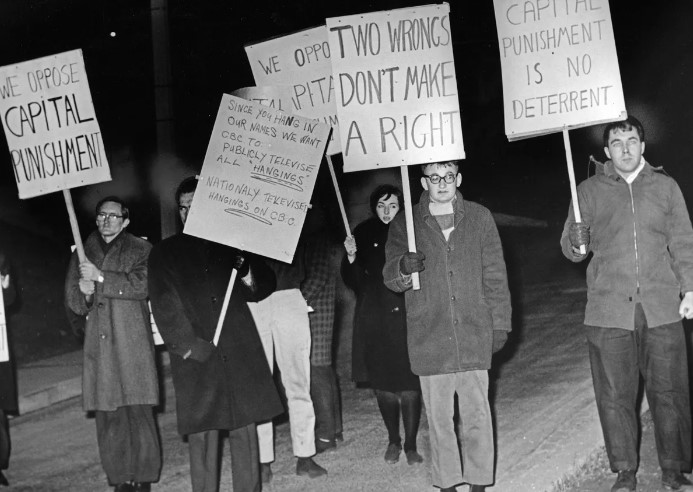
Demonstrators outside the Don Jail in Toronto protest the execution by hanging of two convicted murderers, Ronald Turpin and Arthur Lucas, on Dec. 11, 1962.
Originally published in The Globe and Mail – December 11, 2022
At two minutes past midnight on Dec. 11, 1962, while a small band of demonstrators circled outside in the bitter cold with placards protesting in bold black letters that “hanging is also murder” and that “two wrongs do not make a right,” Ronald Turpin and Arthur Lucas dropped back to back through the gallows trap door in the execution chamber of the Don Jail in Toronto.
Ronald Turpin, 29, was a small-time lawbreaker known to Toronto police. While making his getaway after stealing $632.84 from a fast-food restaurant in Scarborough in February, 1962, Turpin was pulled over by police constable Frederick Nash for bald tires and a broken front headlight. Both men were armed. After a vicious exchange of gunfire, Nash lay dying at the scene. Turpin, who had been wounded, was arrested and charged with murder.
Arthur Lucas, 54, a Black American hoodlum from Detroit, had, according to some of his connections, journeyed to Toronto in November, 1961, to execute fellow gangster Therland Crater, due to testify in the upcoming trial of a drug trafficker in the United States. In the early hours of Nov. 17, Crater and his girlfriend, Carolyn Ann Newman, were found in their rooming house with their throats slashed. Crater had also been shot four times. Lucas, who had visited the couple earlier that very morning, immediately became the prime suspect. He was apprehended in Detroit and extradited to Canada, where he was tried for the murder of Crater.
Lucas and Turpin were both found guilty and sentenced to death on May 10 and June 13, 1962, respectively.
The execution of Ronald Turpin went off relatively smoothly: He was dead within minutes. But you would need to look no further than Arthur Lucas for a chilling example of what can go wrong when the penalty is death.
Read the full article on The Globe and Mail.com

Apr 22, 2022 | Don Jail, Locations, Ontario
He designed St. Michael’s Cathedral, St. Lawrence Hall, and the Don Jail — that last one might have signed his death warrant
After his death in Toronto in 1860, William Thomas was lauded by the Globe as having created “some of the most tasteful buildings of which our city can boast.” The list was long, featuring churches, schools, stores, offices, and stately homes. But Thomas’s reach as an architect after his arrival in Canada West (now Ontario) from his native Britain in 1843 had extended far beyond city limits. Closer to home, his “tastefully” designed buildings adorned cities such as Stratford and St. Catharines, Goderich and Guelph, Perth and Port Hope; farther afield, there was a miscellany of structures in Quebec City and Halifax.
Although Thomas was hugely successful as both an architect and a surveyor in Canada, with more than 80 buildings to his credit, his rise to the pinnacle of his profession was neither swift nor easy.
Read the full article on the TVO website.
Dec 30, 2021 | Don Jail, Historical Moment, Ontario
Part 6: Next Christmas
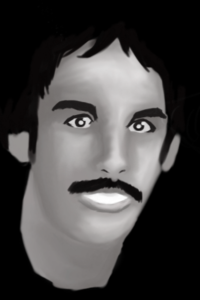 On Tuesday, December 21, 1982, after a series of 10 abortive court appearances due to ongoing congestion within the court system, Leslie Sheppard finally had his moment of truth before York County Court Judge Ted Wren. Sheppard faced a two-to-three-year prison sentence for being an accessory after the fact to the escape of the four convicts from the Don Jail on December 25, 1981.
Rewind to December 1981: Things were looking bright for Sheppard. He was working full time as a printer for York Litho and had just purchased a $100,000 house in Pickering, where he was living with his 10-year-old son. Determined to pay off his mortgage as quickly as possible, he took a second job moonlighting for Diamond Taxis in Toronto. His first day on the job would be December 25. He reckoned that spending Christmas away from his family would be a hardship but well worth his while.
He was wrong.
After he had dropped off just his second fare of the night at Riverdale Hospital, four men, uttering dark threats, scrambled into his cab on the narrow roadway between the hospital and the Don Jail. It took Sheppard mere moments to realize that his vehicle had been commandeered by a quartet of jail breakers.
He was ordered to drive along Gerrard Street East and pull over near Parliament Street. He pleaded with the bandits not to steal his cab and gave back the $10 fare one of them had thrust at him. Three of them got out, warning him to keep his mouth shut. The fourth, Andre Hirsh, rode for a few blocks further and told Sheppard to mislead the police if questioned as to where he had been dropped off.
Sheppard was stopped by police a few minutes later, and he identified himself as the man who had just picked up the escapees outside the jail. It was during the interview that followed that Sheppard, still trembling from his terrifying encounter, committed the grave error that would plunge him into a year of misery and chaos: he lied. He concocted the story that he had dropped all four men off at Gerrard and Sherbourne streets, believing that they were being pursued by bikers. And that they had paid for their ride — $1.70 plus a 30-cent tip.
Sheppard dreaded getting involved, and dreaded even more what might happen if the convicts decided to wreak revenge on him for helping the cops. Over a period of four miserable days, he came to the realization that he had been more than foolish, and he went into a police station to ’fess up. The police were skeptical of his belated efforts to change his story. From their point of view, he was not an innocent victim but someone who had aided inmates to escape.
Sheppard’s annus horribilis had begun.
Over the next 12 months, he was overwhelmed both financially and emotionally. He had to sell his house to cover the thousands of dollars he spent on legal fees. He was depressed, fearful of going out, and terrified that, in spite of being innocent, he would be sent to jail.
His lawyer, Eddie Greenspan, called him “the ultimate victim of circumstances — this poor sap who walked into an utter horror story.”
On Tuesday, December 21, 1982, the judge agreed with Greenspan. His client was acquitted of all charges.
And a delighted Sheppard told the Toronto Star’s Ellie Tesher, “Now I believe in Christmas again.”
Read the full story:
Part 1
Part 2
Part 3
Part 4
Part 5
Dec 29, 2021 | Canada, Don Jail, Historical Moment, Ontario
Part 5: Last Man (Out)standing
On September 24, 1982, Staff-Sergeant Julian Fantino and Sergeant Robert Montrose of Metro Toronto Police flew to Los Angeles. This was no pleasure trip — their purpose was to pick up two fugitive murder suspects and escort them back to Toronto.
The first of these was Robert Palmer, who had allegedly bludgeoned his father to death with a hammer.
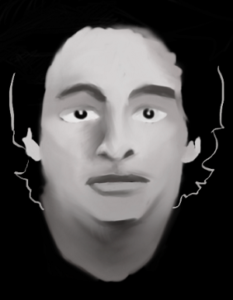 The second was Andre Hirsh, being extradited on the orders of a U.S. federal judge. Hirsh had been charged in Toronto with first-degree murder in the slaying of North York jeweller Frank Abrams in May 1981. He had fled to the U.S. after escaping from the Don Jail in December 1981.
Fantino testified at Hirsh’s trial, which was held in October 1982. When taken into custody after the botched robbery, Hirsh had described himself as “the black sheep” of his family. He was heavily indebted to loan sharks, and “had to have the bread [cash] … or else.” He maintained that the killing was the victim’s own fault: Abrams had foolishly played “Joe Hero” by threatening to call his dogs and attempting to snatch Hirsh’s gun away from him. During a struggle with Abrams outside the store, Hirsh shot the jeweller three times, one bullet piercing his heart.
Crown Counsel Chris Rutherford was appalled. As reported in the Globe and Mail, he declared that Hirsh “should be locked up and locked up for a long time…. He killed an innocent, peaceable shopkeeper who had the absolute audacity to stand up for his property.”
Hirsh was found guilty of second-degree murder. Before his sentence was handed down on November 30, 1982, his defence lawyer read to the court a one-page handwritten letter of apology, addressed to Frank Abrams’s widow. Part of it stated: “I am not a cold-blooded vicious person without conscience…. I feel the disgust you must have for me; it shames me strongly. Please understand that there is no limit to the remorse I feel and will carry with me forever…. I’m sorry, I’m truly sorry.”
Hirsh’s letter did not succeed in altering the opinion of Mr. Justice John O’Driscoll, who remained unimpressed. “There may be some degree of remorse in you,” he told Hirsh. But “you are also more than somewhat of a con man.” He sentenced Hirsh to life imprisonment with no parole for at least 16 years.
Part 1
Part 2
Part 3
Part 4
Part 6
Dec 28, 2021 | Don Jail, Historical Moment, Ontario
Part 4: The Third Man
By December 28, 1981, Don Jail escapees Terry Musgrave and Randy Garrison were both safely behind bars. On January 3, 1982, by pure accident, the next fugitive was ushered back into the fold.
That Sunday, the Ontario Provincial Police (OPP) detachment at Lindsay received a tip from a sharp-eyed cottager in Kenrei Park, a small community some 5 kilometres north of Lindsay, that someone appeared to be occupying a cottage that should, rightly, have been unoccupied. Three officers paid a visit to the community to check things out; there was indeed a trespasser. After surrounding the cottage, they took the intruder into custody. The man was alone and unarmed, and he offered no resistance.
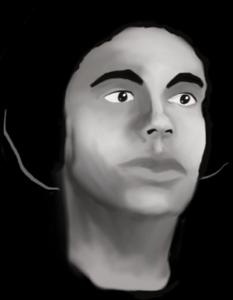 It was only after the arrest that the OPP established his identity — Brian William Bush, who had been charged with robbery and possessing restricted weapons. Metro Toronto Police had earlier described Bush as “very dangerous”; their Lindsay counterparts must have thanked their lucky stars that he had none of those lethal weapons on his person at the time.
On February 9, Bush was convicted for his part in the bungled Leaside bank robbery in March 1981 that left one of his fellow bandits dead and two others wounded in a shootout with police. This was his third robbery conviction. As reported in the Toronto Star, a stern Judge Hugh Locke told the court that Bush regarded “jail as an occupational hazard. He knew there were weapons being used. He is a very dangerous man with dire prospects for rehabilitation.” He sentenced Bush to 11 years in prison.
Part 1
Part 2
Part 3
Part 5
Part 6